Digital vs Physical Storage for Deed Polls
When it comes to storing your deed poll, you have two main options: digital storage and physical storage. Each has its strengths and limitations, and the choice depends on your needs. Here's a quick breakdown:
- Digital Storage: Convenient for quick access and sharing, but not accepted by many UK government bodies like HM Passport Office or the DVLA. It also faces risks like hacking and data breaches.
- Physical Storage: Essential for official processes as most organisations require the original document. However, it can be lost, damaged, or harder to retrieve.
Best Approach: Use both methods. Keep your original deed poll in a secure location, and create digital backups for non-official purposes like updating utility providers or mobile contracts. This ensures you’re covered in case of loss or damage to the original.
Quick Comparison:
| Factor | Digital Storage | Physical Storage |
|---|---|---|
| Access | Instant, online access | Requires physical retrieval |
| Legal Use | Often not accepted by government bodies | Universally accepted |
| Security Risks | Cyberattacks, data breaches | Fire, water damage, theft |
| Cost | Higher upfront (scanning, software) | Lower upfront (paper, storage) |
| Lifespan | 10 years (hardware updates needed) | Can last centuries if stored properly |
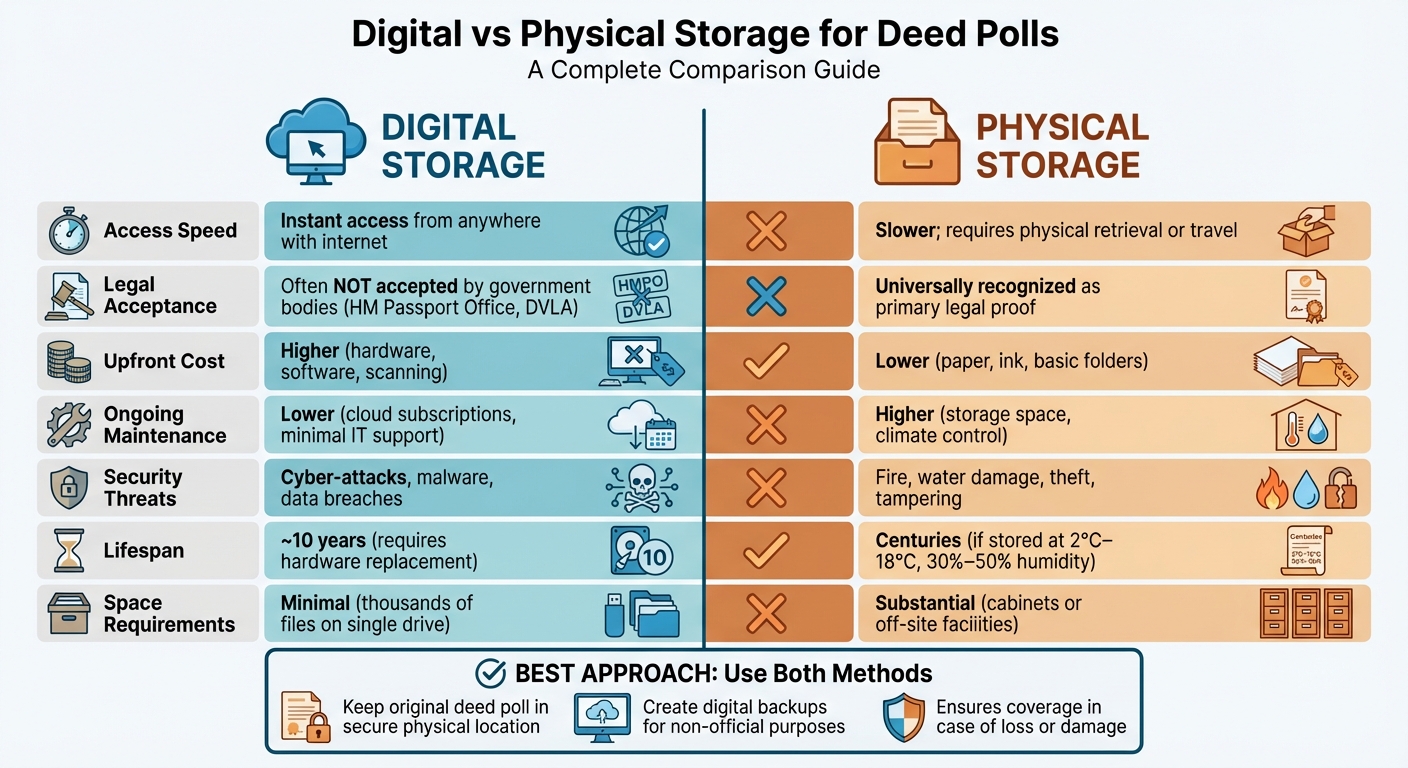
Digital vs Physical Deed Poll Storage Comparison Chart
Digital Storage: Pros and Cons
Benefits of Digital Storage
Digital storage makes accessing your deed poll incredibly convenient. You can upload, share, or access it online from anywhere, which simplifies updating your details with banks, utility companies, or mobile providers that accept digital copies. This eliminates the hassle of postal delays, saving both time and effort.
Another advantage is the security of backup services, such as those offered by Name Change. For example, one satisfied user, Miss Megs, shared:
I also got the virtual deed poll storage which was easy and efficient and put my mind at ease if anything happens to my deed poll documents
.
Digital platforms also minimise common manual errors. For instance, automated form generation ensures that mistakes like invalid "crossings out" - which could void a physical deed - are avoided. Users often praise the simplicity of the online process, with many noting how quick it is. Some even reported receiving their documents within 48 hours of submitting their application.
However, while digital storage offers these conveniences, it isn't without its challenges.
Drawbacks of Digital Storage
One major drawback is that most UK government bodies still insist on the original physical deed poll. Agencies like HM Passport Office and the DVLA typically won't accept digital scans or copies, requiring the original document for official updates. This means digital storage is useful as a backup but cannot replace the original for critical identity changes.
There’s also the issue of cybersecurity. Digital records are more vulnerable to hacking, data breaches, and other cyberattacks. They depend on the ongoing security and reliability of the storage platform, and in some cases, digital copies may face challenges in being accepted in court.
If you decide to enrol your deed poll - which costs £53.05 and creates a public digital record - it's important to consider the potential privacy implications. Enrolment makes your personal details, including your old and new names as well as your home address, permanently searchable online via The Gazette. This is a risk unique to enrolled deed polls and does not apply to those stored privately.
Physical Storage: Pros and Cons
Benefits of Physical Storage
After exploring digital storage, let’s delve into the traditional method of physical storage, which still plays a key role, especially for legal processes.
In the UK, agencies often require the original deed poll with witness signatures as valid evidence for identity updates. As Lord Justice Ormrod clarified:
The purpose of enrolment is only evidential and formal. A deed poll is just as effective or ineffective whether it is enrolled or not; the only point of enrolment is that it will provide unquestionable proof, if proof is required.
For those seeking long-term security, enrolling a deed poll offers government-supported safekeeping. However, this process comes with a fee of £53.05 and can take anywhere from 1 to 3 months to complete. On this, Mr Justice Holman remarked:
enrolment of a deed poll is not a prerequisite to a change of surname and merely evidences a change in a particularly formal way.
While these benefits are appealing, physical storage isn’t without its challenges.
Drawbacks of Physical Storage
Despite its legal reliability, physical storage has its fair share of downsides.
One major concern is the potential for damage during transit. This issue was highlighted by Debbie Oliver, who shared her experience:
some certificates arrive in worse condition than when sent
Another drawback is the lack of a central registry for unenrolled deed polls. If lost, replacements can only be issued by the solicitor or agency that created the original document. For enrolled deed polls, obtaining a certified copy after five years involves a £25 fee and may even require an in-person visit to the National Archives.
Additionally, enrolling a deed poll comes with privacy implications. Your previous name, new name, and full home address are permanently published in The Gazette and made searchable online.
Digital vs Physical Storage: Side-by-Side Comparison
Now that we've broken down each method, let's take a closer look at how they stack up against each other.
Here's a quick comparison of the key factors:
| Factor | Digital Storage | Physical Storage |
|---|---|---|
| Access Speed | Instant access from anywhere with an internet connection | Slower; requires physical retrieval or travel to a storage location |
| Legal Acceptance | Often not accepted by agencies that require original documents | Universally recognised as primary legal proof |
| Upfront Cost | Higher initial costs (hardware, software, scanning) | Lower initial costs (paper, ink, basic folders) |
| Ongoing Maintenance | Lower (cloud subscriptions, minimal IT support) | Higher (storage space, climate control) |
| Security Threats | Susceptible to cyber-attacks, malware, and data breaches | Vulnerable to fire, water damage, theft, and tampering |
| Lifespan | Around 10 years (requires hardware replacement) | Can last centuries if stored under optimal conditions (2°C–18°C, 30%–50% humidity) |
| Space Requirements | Minimal; thousands of files fit on a single drive | Demands substantial physical space, like cabinets or off-site facilities |
Expert opinions further underline these points:
"Digital storage is a relatively new technology compared to time-tested paper files, and not only has it yet to prove its longevity, but that's not what it was designed for."
The legal perspective is also crucial, as highlighted by the Deed Poll Office:
"Most organisations - including HM Passport Office and the DVLA - will want to see your original deed poll as proof of your name."
These comparisons can help you decide which option suits your needs or whether a mix of both might be the best approach.
sbb-itb-bf1bef6
Which Storage Method for Different Situations
Selecting the right storage method depends on your specific needs. Here’s a breakdown of when each option works best:
When to Use Digital Storage
Digital storage works well for tasks that require quick and remote access. For instance, if you're updating your information with a mobile phone provider, energy company, or other online services, a scanned copy of your deed poll is typically sufficient when sent via email or uploaded through their websites. However, keep in mind that digital copies are not accepted for all official processes.
When to Use Physical Storage
Physical storage is crucial for official transactions. Organisations like HM Passport Office, DVLA, banks, and other financial institutions often require the original deed poll. If your deed poll is enrolled, it will include an official seal, adding to its authenticity. Store your original deed poll in a secure, fireproof place, as it’s the key document needed for applications such as passports or other identity verifications. Always check the specific requirements of each organisation to ensure compliance.
Combining Digital and Physical Storage
By merging the strengths of both digital and physical storage, you can ensure comprehensive protection for your documents. This approach provides instant digital access for online updates while keeping physical originals readily available for organisations like government departments and banks that require hard copies.
How to Use Both Storage Methods
The best strategy is to maintain multiple original physical copies alongside secure digital backups. For example, keep an extra original deed poll at home while submitting others to organisations like the Passport Office or DVLA. This avoids delays when several institutions require physical documents simultaneously.
To create a robust digital backup, scan your deed poll as a PDF immediately after signing and witnessing it. These digital copies are perfect for employers, utility companies, and mobile providers that accept document uploads through their websites. With secure digital storage, you’ll always have access to your deed poll, even if the physical copies are damaged or misplaced.
At the same time, physical documents remain vital for official verifications. When sending deed polls by post, use tracked delivery to ensure safe transit. For organisations that accept them, certified copies - endorsed by a solicitor or notary public for around £5 - can be used instead of your original document. This allows you to keep your primary copy secure at home.
Official guidance supports this approach:
"A certified copy of a deed poll or statutory declaration though can generally be used anywhere instead of the original document - including at HM Passport Office and the DVLA." - Deed Poll Office
Conclusion
Digital storage offers convenience and quick access, while physical copies fulfil legal requirements. While digital copies are perfect for everyday use, the original physical documents remain crucial for legal updates and verification. Striking a balance between these two methods is the key to effective document management.
The ideal approach combines both: store your original signed deed poll securely at home and create high-quality digital scans for daily use. This strategy not only protects against physical risks like fire or flooding but also ensures you have a backup in case your digital files are compromised. As Access Self Storage advises:
The best option for storing your most important documents is to have a readily available digital copy with a physical backup
.
Additionally, ordering multiple certified copies at the same time is a smart move. This way, you can meet submission needs without jeopardising your only original document.
FAQs
Why do UK government bodies require physical deed polls for name changes?
Physical deed polls serve as the official legal evidence of a name change in the UK. These documents are crucial for government bodies to confirm the validity of the change and to ensure it is acknowledged for official records and purposes.
In certain situations, a deed poll might need to be publicly registered, such as by enrolling it at the Royal Courts of Justice or having it published in the London Gazette. This step helps solidify the name change as legally binding and ensures it is recognised by UK authorities and organisations.
What’s the best way to keep my digital deed poll secure?
To safeguard your digital deed poll, make sure to store it in an encrypted format with a trusted and secure storage service. Protect access with a strong password, and it’s a good idea to back it up in a reliable location to avoid losing it accidentally.
Look for a service that provides secure archiving and the ability to issue replacement documents if necessary. This way, you’ll have the reassurance that your deed poll is safe and readily available whenever you need it.
What are the privacy concerns when enrolling a deed poll?
Enrolling a deed poll in the UK involves adding your personal details - like your old and new names, as well as your home address - to the public record. This information is then published in The Gazette, making it accessible to anyone. For some, this level of exposure might raise privacy concerns.
If maintaining confidentiality is important, a non-enrolled deed poll might be a better option. Unlike enrolled deed polls, these are private documents that aren’t publicly registered. This means only those you choose to share the document with will have access to it. Take the time to weigh up whether enrolling a deed poll is necessary, especially if protecting your privacy is a priority.