Do You Need a Solicitor for a Deed Poll?
In most cases, you don’t need a solicitor to change your name using a deed poll in the UK. Adults aged 16 or over can create an unenrolled deed poll themselves, which is widely accepted by organisations like the Passport Office and DVLA. Here's what you need to know:
- Unenrolled Deed Polls: These are simple, self-made documents that are legal and cost nothing if you follow the correct format.
- Enrolled Deed Polls: These require a solicitor or commissioner for oaths for witnessing and cost £53.05 to file with the High Court. Only 1 in 200 people opt for this.
- When Solicitors Are Needed: For complex cases like child name changes, disputes, or international requirements, legal advice may be required.
Most people save time and money by handling the process themselves. Services like Name Change offer low-cost solutions for creating a valid deed poll without needing a solicitor.
Do You Need a Solicitor for a Deed Poll?
In most cases, you don’t need a solicitor to create a deed poll. UK law allows adults aged 16 or over to draft an unenrolled deed poll themselves. It’s a simple process that doesn’t require approval from any authority, as long as the name change isn’t for fraudulent purposes.
Some people mistakenly think solicitors are necessary because they offer fee-based witnessing services. However, a deed poll is a legal document that you and your witnesses authenticate - it’s not a certificate issued by any central authority.
"There is no such thing as an official deed poll office or deed poll service. There is a lot of confusion about what a deed poll is - it is a legal document - not a certificate." - Deed Poll Office
A solicitor is only required if you decide to enrol your deed poll with the High Court. This process, costing £53.05, places your name change on public record. For this, a solicitor or commissioner for oaths must witness your statutory declaration (Form LOC021). However, over 99% of people opt for unenrolled deed polls, as most organisations in the UK accept them without issue.
Let’s break down when you can confidently handle a deed poll on your own and address some common myths.
When You Can Apply Without a Solicitor
If you’re an adult aged 16 or over and creating an unenrolled deed poll, you can follow the process of changing your name by deed poll yourself. Here’s what you’ll need:
- Two independent witnesses who are at least 18 years old. Ideally, they shouldn’t be close relatives or live at the same address, as some organisations might not accept the document otherwise.
- You must sign the deed poll with both your old signature and your new signature in front of these witnesses.
- The document must include the specific legal wording provided by GOV.UK to ensure it’s accepted by organisations like the Passport Office.
Once signed and witnessed, your deed poll is ready to use as proof of your name change. Before creating the document, it’s a good idea to check with your bank, GP, and other record-holders to confirm they accept self-made deed polls. Most do, but a quick check can save you from unnecessary complications.
Common Misconceptions About Solicitors and Deed Polls
There’s a persistent myth that a deed poll must be drafted or “issued” by a solicitor or an official government office to be legally valid. This misunderstanding is sometimes reinforced by organisations like banks or insurers, which may claim they need an “official” or “enrolled” deed poll, leading people to doubt the validity of DIY versions.
The truth is, there’s no government deed poll office in the UK. Some private agencies use this term, but it’s misleading. A self-created deed poll is just as valid as one prepared by a solicitor, as long as it includes the correct wording and is properly witnessed.
Another common misconception is that involving a solicitor makes the deed poll more “official” or more likely to be accepted. In reality, organisations like HM Passport Office and DVLA readily accept unenrolled deed polls. The validity of the document comes from your declaration and the witnesses’ signatures - not a solicitor’s stamp.
When Is a Solicitor Necessary?
Although many adults can manage an unenrolled deed poll independently, there are specific situations where involving a solicitor is either legally required or highly recommended.
Changing a Child's Name
When it comes to changing a child's name, the process is more complex. Written consent is mandatory from everyone with parental responsibility. For children aged 16–17, their consent must also be certified by an independent witness who is at least 18 years old. If you plan to enrol a child's deed poll with the High Court, a solicitor or commissioner for oaths must witness the necessary documents, including the Affidavit of Best Interest (Form LOC023), Statutory Declaration (Form LOC024), and Exhibit Cover Sheet (Form LOC028).
In cases where a parent or guardian refuses consent, you'll need to apply for a specific issue order from the family court using Form C100, which comes with a fee of £263. For situations involving public registration, refer to the next section on enrolled deed polls.
Enrolled Deed Polls
If you decide to enrol your deed poll with the Royal Courts of Justice, you'll need a solicitor, commissioner for oaths, or court officer to witness your Statutory Declaration (Form LOC021) and Exhibit Cover Sheet (Form LOC027). The enrolment process costs £53.05, with an additional £14 for taking a court oath. Keep in mind that processing can take up to 16 weeks. The next section explores scenarios where legal advice is particularly helpful.
Other Legal Challenges
Certain situations call for professional legal guidance. For example, if you were born outside the UK, hold dual citizenship, or work in regulated fields like law or medicine, consulting a solicitor ensures your name change complies with all relevant legal and professional standards.
Additionally, individuals on the sex offenders register, or those convicted of violent or terrorist offences, must notify the police within three days of any name change. Failing to do so is a criminal offence.
The Costs of Using a Solicitor vs. Self-Service
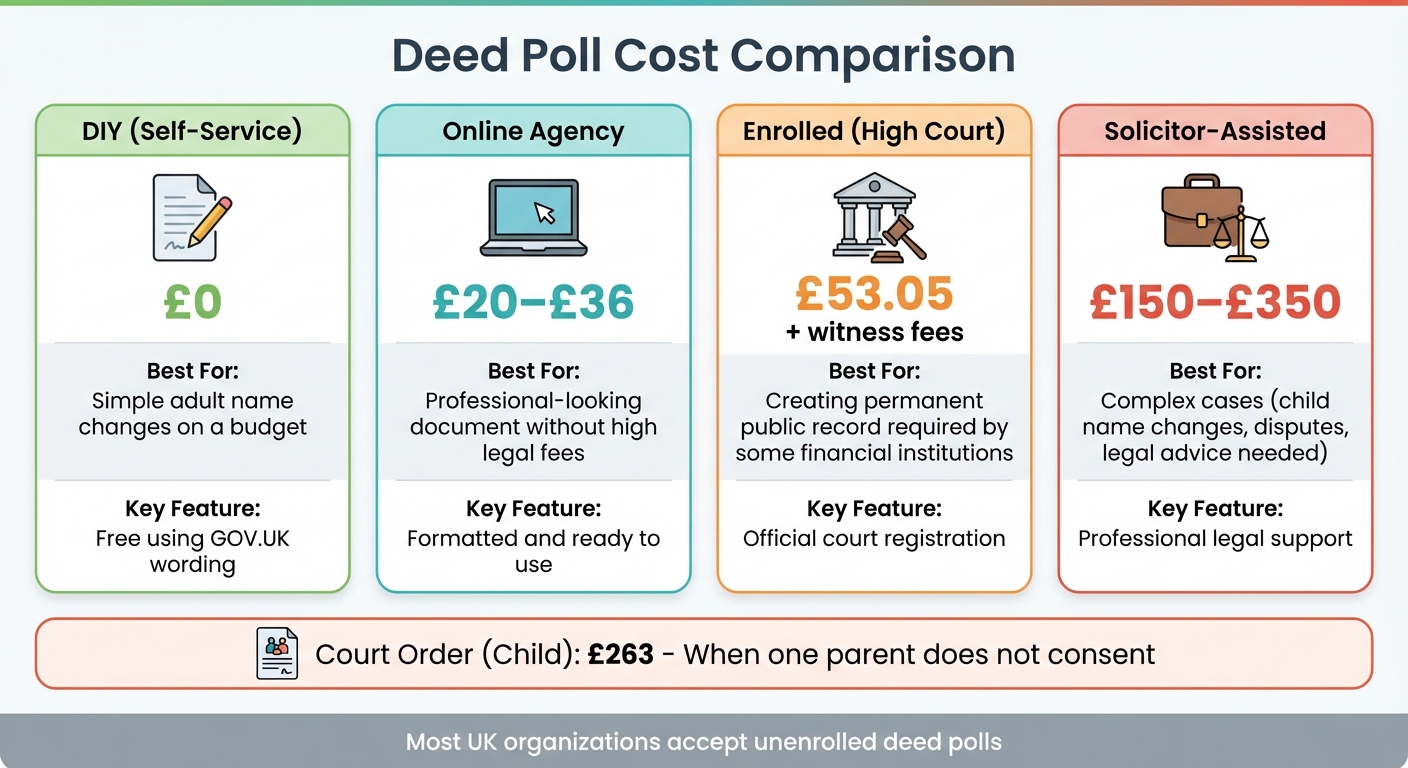
UK Deed Poll Cost Comparison: DIY vs Solicitor vs Enrolled Options
When deciding between a solicitor or a DIY approach for a deed poll, understanding the costs involved can help you make the right choice. If you opt for a DIY unenrolled deed poll using the official GOV.UK wording, it won’t cost you a penny. However, online agencies typically charge between £20 and £36 for a professionally formatted document.
Using a solicitor for an unenrolled deed poll, on the other hand, can cost anywhere from £150 to £350. Solicitors' hourly rates vary widely, ranging from £142 to £579. For enrolled deed polls, you’ll need to pay a court fee of £53.05, along with any additional fees for witnessing.
Here’s a breakdown of these costs for easy comparison:
Cost Comparison Table
| Service Type | Typical Cost | Best For |
|---|---|---|
| DIY (Self-Service) | £0 | Simple adult name changes on a budget |
| Online Agency | £20–£36 | A professional-looking document without high legal fees |
| Enrolled (High Court) | £53.05 (plus witness fees) | Creating a permanent public record required by some financial institutions |
| Solicitor-Assisted | £150–£350 | Complex cases, such as child name changes or when legal advice is needed or you want to understand the legal implications of changing your name |
| Court Order (Child) | £263 | Changing a child's name when one parent does not consent |
Before spending money, check with your bank or insurer to ensure they accept a self-made unenrolled deed poll. Most UK government departments and major organisations do, which means you could save hundreds by taking the self-service route.
Up next, see how Name Change makes this process even simpler.
sbb-itb-bf1bef6
How Name Change Simplifies the Process

Building on the advantages of a DIY approach, Name Change makes the process even easier. If you're looking for a quick and simple way to change your name without involving solicitors or court appointments, this service offers a clear, solicitor-free solution. It provides legally valid unenrolled deed polls that fully comply with UK government standards.
What Name Change Offers
With over 100,000 UK residents already using the service, Name Change follows a straightforward two-step process: complete an online application and sign the document with a witness present [7, 23]. You'll receive a personalised Deed Poll Pack, which includes your official document, a secure storage folder, and step-by-step instructions for execution.
Updating your records is also made easier. Name Change provides a list of organisations to notify - like your bank, mobile provider, or energy supplier - along with example covering letters to guide you [2, 23]. Additionally, the service includes a legal copy and archive feature, so if you misplace your original document, getting a replacement is far easier than retrieving enrolled records from the National Archives [16, 23]. This combination of tools and services ensures a smooth and efficient name change process.
How Name Change Saves Time and Money
By cutting out the need for lengthy court procedures, Name Change offers a faster and more affordable alternative. While solicitor-led name changes can cost hundreds, this service provides everything you need for as little as £16.95. The standard package (£16.95) or premium option (£24.95, featuring a gold embossed stamp) includes three certified copies, tracked UK delivery, and unlimited PDF downloads - offering substantial savings compared to traditional solicitor fees.
The entire process is completed online, with no need for legal appointments. Your deed poll is ready for use immediately after signing. This is a stark contrast to the High Court enrolment process, which can take 1 to 3 months and requires publishing personal details in The Gazette for public record. Name Change not only protects your privacy but also ensures your document meets all legal requirements. It’s a practical, cost-effective solution for anyone seeking a legal name change without unnecessary complications.
Conclusion
For most people in the UK, an unenrolled deed poll - created without the involvement of a solicitor - is more than enough. In fact, over 99% of UK residents rely on this private document, which can be prepared independently and witnessed by any adult over the age of 18. Organisations such as HM Passport Office, the DVLA, and most banks accept these documents without requiring solicitor involvement.
However, there are situations where legal assistance becomes necessary. For example, enrolling a deed poll with the High Court requires a solicitor’s witness. Similarly, complex cases like child name changes, disputes, or certain international requirements (such as embassy notarisation for foreign nationals) might call for help and support. In cases involving a court order, fees can reach £263.
The costs also vary significantly. Enrolled deed polls come with a £53.05 court fee, alongside additional solicitor expenses. In contrast, unenrolled deed polls are far more affordable, typically costing between £10 and £20. As Mr Justice Holman once explained, "Enrolment of a deed poll is not a prerequisite to a change of surname and merely evidences a change in a particularly formal way". This clear difference in cost and complexity makes the unenrolled option an obvious choice for most.
Services like Name Change simplify the process even further. For just £16.95, you can obtain a legally valid deed poll without the hassle of solicitor appointments, court visits, or public records in The Gazette. With over 100,000 UK residents already using the service to change their names quickly and privately, it’s clear that professional legal help isn’t necessary for standard adult name changes.
FAQs
What are the advantages of choosing an unenrolled deed poll over an enrolled one?
Opting for an unenrolled deed poll comes with a few clear upsides compared to its enrolled counterpart. For starters, it’s quicker and more affordable since it skips the court registration process and avoids additional fees. This makes it a straightforward choice for those looking to legally change their name without unnecessary hassle.
Another plus is its broad acceptance. Most UK organisations, including government departments, banks, and employers, recognise properly prepared and signed unenrolled deed polls. On top of that, they offer a higher level of privacy. Unlike enrolled deed polls, they don’t appear on the public record, which can be a relief for those wanting to keep their name change private. This is particularly helpful in situations involving children or personal safety concerns.
In short, an unenrolled deed poll often provides all the legal recognition you need, minus the added cost or public visibility of an enrolled deed poll.
Do I need a solicitor to change my name with a deed poll?
In the UK, you usually don’t need a solicitor to create or use a deed poll. It’s a simple legal document that you can prepare and sign on your own, and it will still hold legal validity without professional help.
That said, there are certain situations where a solicitor might be needed. For example, if you plan to enrol your deed poll at the Royal Courts of Justice or if the document requires official authentication, legal assistance could be necessary. For most people, though, the process is straightforward, low-cost, and easy to handle independently, making it a practical way to legally change your name.
Do I need a solicitor to create a deed poll?
No, you don’t need a solicitor to create a deed poll. In the UK, a deed poll is a simple legal document that you can prepare yourself, as long as it meets the necessary legal standards.
For your deed poll to be accepted by organisations, it must be executed correctly. This means it should be signed in the presence of an independent witness who is over 18 and not a close relative. The document must also clearly outline your intention to change your name and follow the proper format required under UK law.
If you’d rather avoid the hassle, services like Name Change can help. They provide legally compliant deed polls, certified copies, and other features to ensure smooth acceptance by UK government bodies and organisations.